Builds · 14 min
MH Wilds Best Armor Skills: Which Ones Are Actually Worth a Slot in Ver. 1.042, With Monclerty
Monclerty went through 25 armor skills one by one and said which deserve a jewel. We read every in-game skill panel off his footage, checked the numbers against the game data, and counted how many of our 42 endgame builds actually run each one.

Written with
Monclerty
The skill-by-skill verdicts, the testing in the training area and every game screenshot on this page by Monclerty
By MHWilds Build with Monclerty
The best armor skills in MH Wilds for Ver. 1.042 are Weakness Exploit, Agitator and a level of Burst for damage, Antivirus whenever you wear Gore Magala gear, Counterstrike on weapons that offset, and Divine Blessing as cheap insurance. That is where Monclerty’s skill-by-skill verdicts and our own builds agree: of the 42 endgame builds on this site, 34 run Weakness Exploit, 37 run Burst and 31 run Divine Blessing.
Monclerty’s video covers 25 armor skills from the Title Update 4.5 balance (Ver. 1.041), which Ver. 1.042 left untouched. He is explicit that his priority ratings are his personal opinion, and none of them appears on screen as a graphic, so every verdict below is attributed to him. The numbers are not opinion: we read each in-game skill panel off his footage and checked it against the game data behind our decoration database. Where he misspoke, the game wins, and we say so in the section.
What are the best armor skills in MH Wilds?
The table gives each skill Monclerty’s verdict, the smallest jewel that carries it, and how often it shows up in our 42 endgame builds, where the loadouts are recomputed from the game data. The last column is the evidence that a verdict holds up in real sets, not just in theory.
| Skill | Monclerty’s verdict | Jewel | In our 42 endgame builds |
|---|---|---|---|
| Weakness Exploit | High for most damage builds | Tenderizer [3] | 34, almost all at Lv 5 |
| Burst | Lv 1 for raw, Lv 5 for element | Chain [3] | 37, usually Lv 2 |
| Agitator | High, at least 2 points | Challenger [3] | 31, usually Lv 5 |
| Divine Blessing | High while learning a monster | Protection [1] | 31, usually Lv 3 |
| Maximum Might | High on stationary weapons | Mighty [2] | 22, usually Lv 3 |
| Evade Extender | High on slow weapons | Jumping [2] | 20, usually Lv 2 |
| Flayer | One or two cheap levels | Flayer [3] | 19 |
| Antivirus | Mandatory with Gore Magala gear | Sane [1] | 16, all at Lv 3 |
| Peak Performance | Low for most players | Flawless [2] | 14 |
| Counterstrike | High on offset and hyper armor weapons | Counter [2] | 13, usually Lv 3 |
| Adrenaline Rush | High on Long Sword, Dual Blades, Bow | Counterattack [3] | 10, usually Lv 1 |
| Quick Sheathe | High on Long Sword | Sheath [1] | 9 |
| Coalescence | High on elemental builds, with a trigger | Phoenix [2] | 7 |
| Latent Power | Good, not S-tier | Throttle [3] | 6, usually Lv 5 |
| Resentment | Medium, niche | Furor [2] | 4 |
| Earplugs | Mid to high for setup weapons | Earplugs [2] | 3 |
| Wide-Range | Support builds only, Lv 5 or nothing | Friendship [1] | 1, at Lv 5 |
| Defense Boost | Low for most builds | Defense [1] | 0 |
Two things jump out. Defense Boost appears in none of the 42, which matches Monclerty’s low rating. And Divine Blessing, which he rates as insurance rather than a must, sits in three builds out of four, because three levels only cost three size 1 slots that damage jewels cannot use anyway.
![Monster Hunter Wilds decoration box with Tenderizer Jewel [3], Mighty Jewel [2], Challenger Jewel [3] and Sane Jewel [1] slotted in a Charge Blade set](/images/articles/armor-skills-monclerty/mh-wilds-decoration-box-jewel-sizes.webp)
Is Weakness Exploit worth maxing in MH Wilds?
Yes, for any damage build that hits weak points. Weakness Exploit adds affinity to hits on weak points and more on wounds: +5% and +3% at Lv 1, +15% and +10% at Lv 3, and +30% and +20% at Lv 5. Monclerty’s rule of thumb is to count only the weak-point figure, because wounds come and go. His card at 2:53 adds the definition that matters: a good hitzone is a hitzone value above 45, and the yellow or white damage numbers do not affect the skill. Our weakness chart lists the parts above that line for every monster.
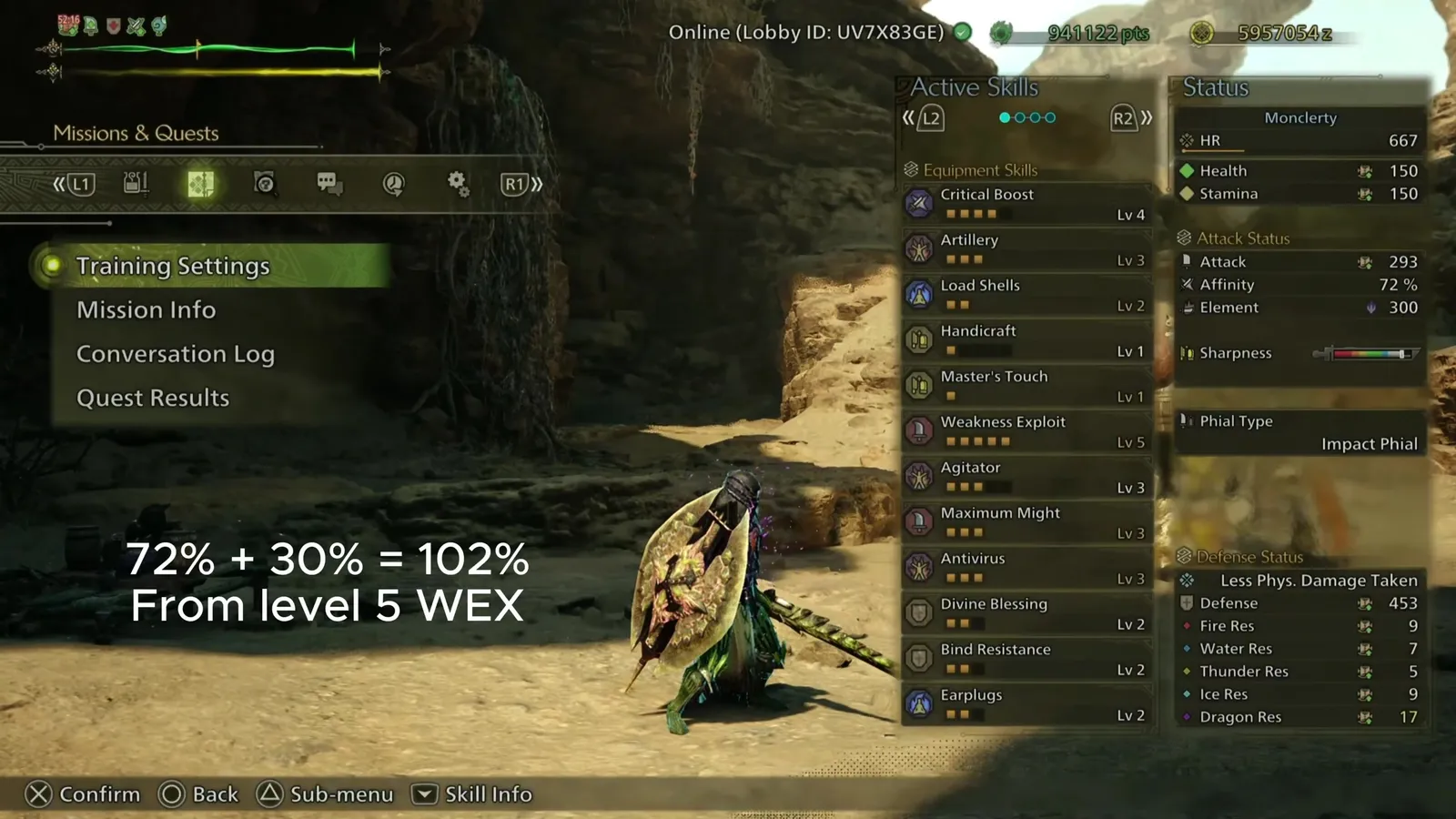
The trap is the equipment screen, which does not include it. In his example the menu shows 72% affinity, and the real figure against a weak point is 102% with Weakness Exploit 5 on top. He advises reaching Lv 3 at minimum and pairing it with Critical Boost in the weapon slots. Our builds go further: 32 of the 34 that run it take it to Lv 5, as the Weakness Exploit Dual Blades build does.
Where it falls down is aim. If you keep hitting hard parts, the affinity never applies. That is what the hard-skin builds are for: Mind’s Eye instead of Weakness Exploit, as in the hard-skin Dual Blades build.
Maximum Might or Latent Power: which affinity skill is better?
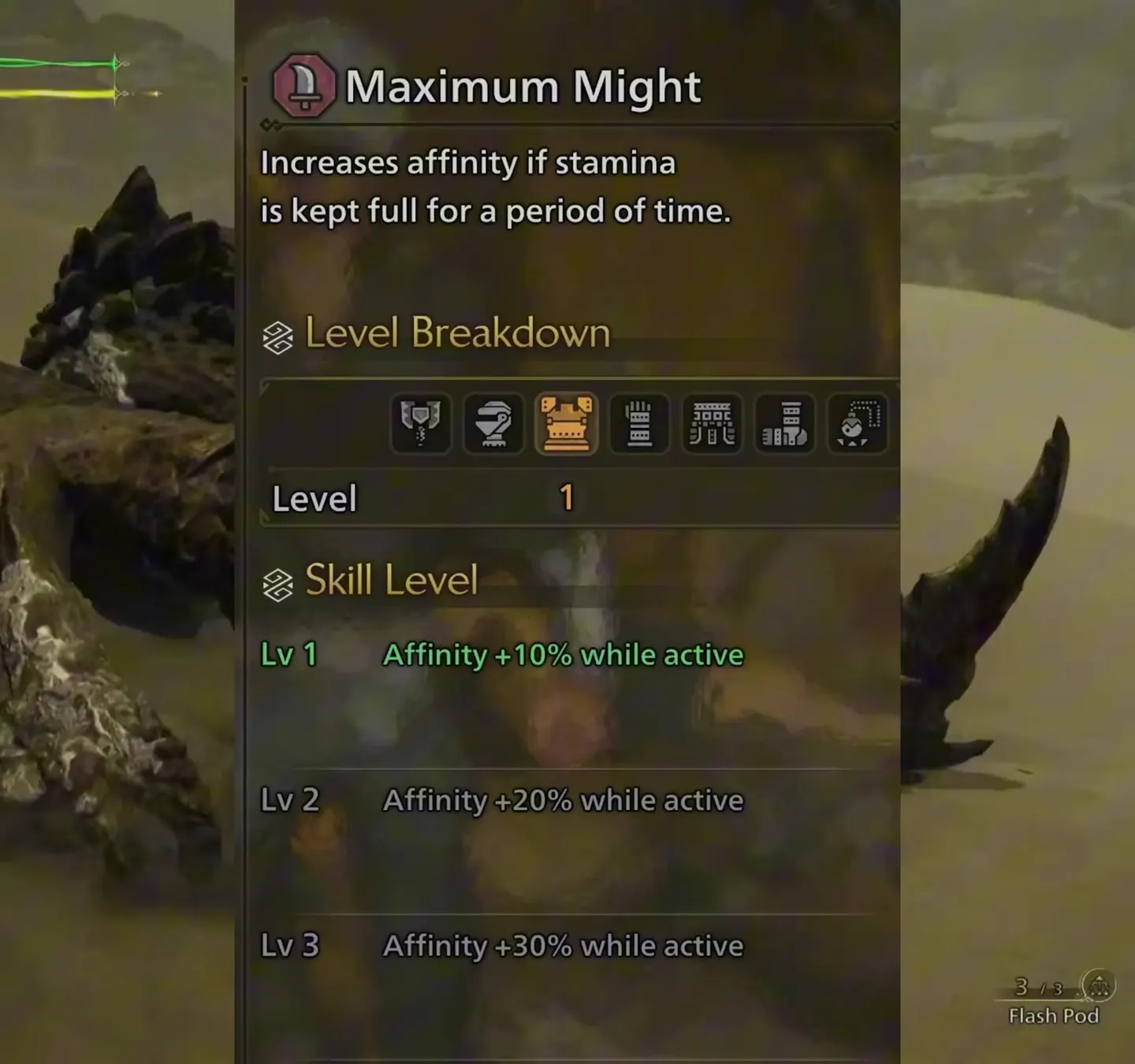
Maximum Might is the better one if your weapon lets you keep the stamina bar full. It gives +10%, +20% or +30% affinity while stamina stays full, from a size 2 jewel, and it stacks with Weakness Exploit. Monclerty rates it high for weapons that deal damage standing still and much weaker on Dual Blades and Bow, which drain stamina constantly. Blocking and rolling both switch it off.
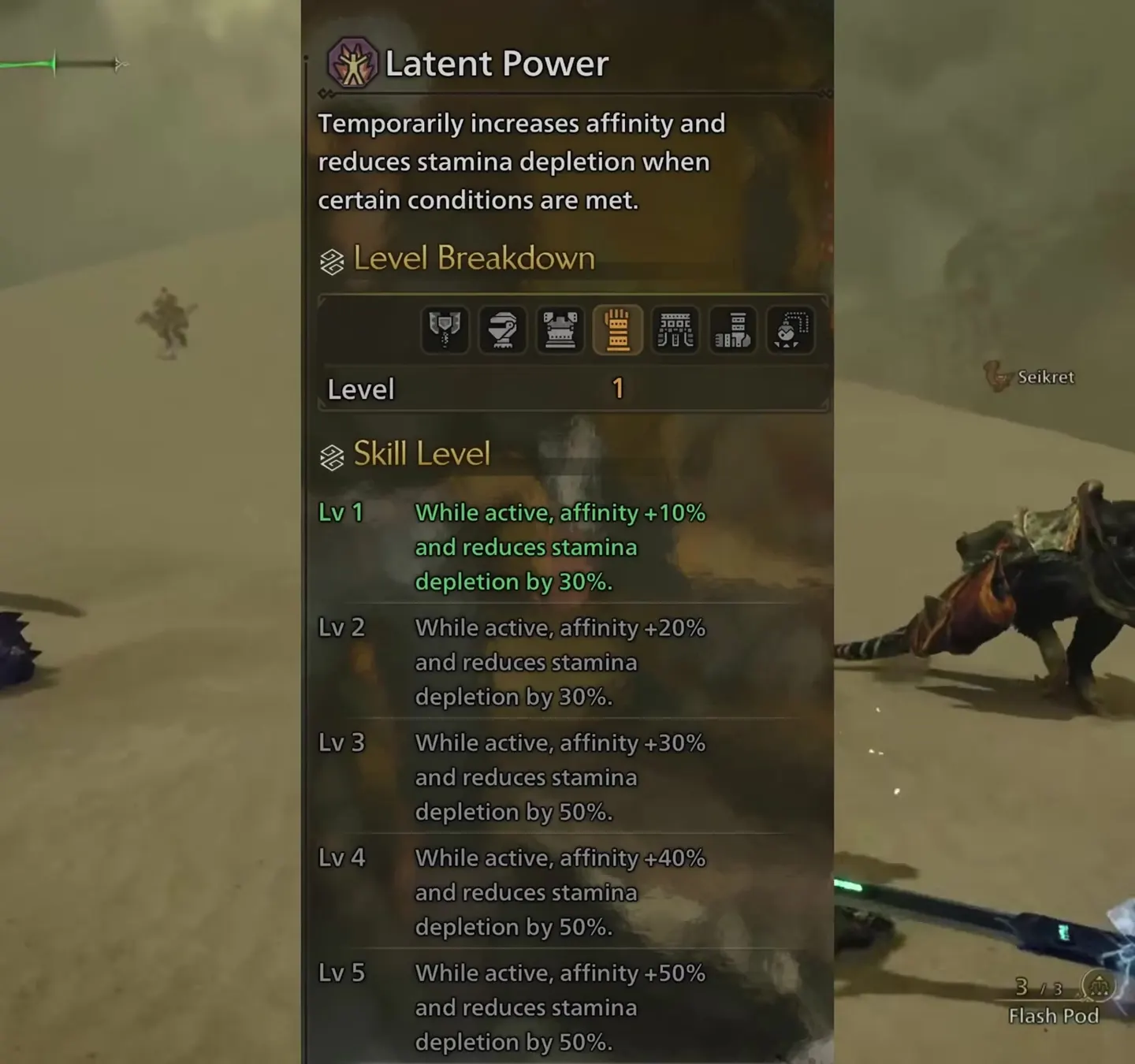
His workaround for stamina-hungry weapons is Fulgur Anjanath’s Will, whose two-piece bonus adds a second stamina gauge; the skill stays on as long as you do not dip below the first bar. Latent Power is the fallback when Maximum Might cannot work: +10% affinity at Lv 1 up to +50% at Lv 5, plus 30% to 50% less stamina used. The catch is the trigger. Monclerty’s card puts it at about 130 points of damage taken or about 120 seconds of combat, so you do not decide when it is on. His verdict is “good, just not anything S-tier”.
Our builds split the same way. Maximum Might is in 22 endgame builds; Latent Power is in 6, half of them Dual Blades sets that cannot keep stamina full, like the Latent Power Dual Blades build.
Is Agitator worth it in MH Wilds?
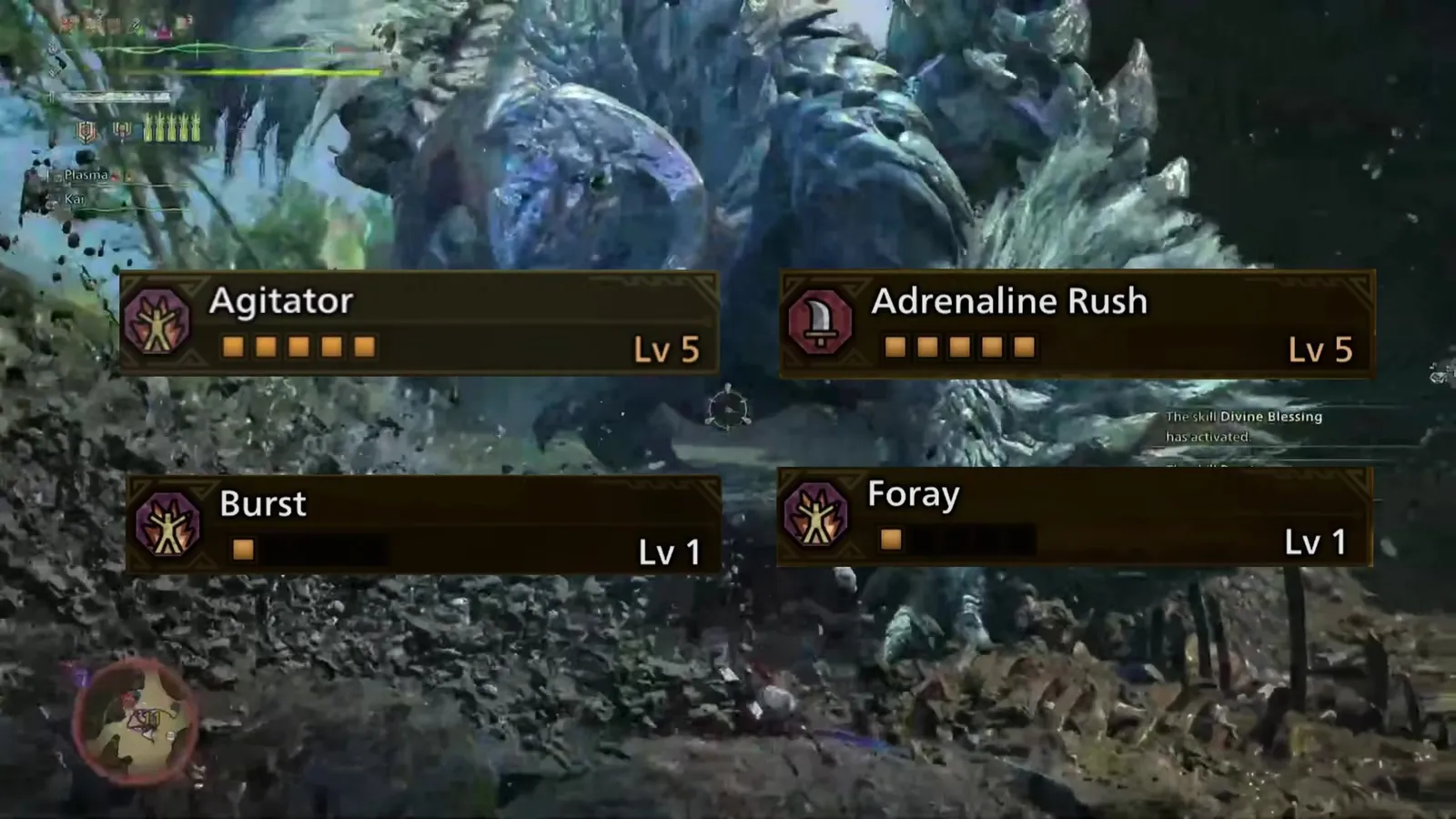
Yes. Agitator raises attack and affinity while the monster is enraged: +4 attack and +3% affinity at Lv 1, up to +20 attack and +15% affinity at Lv 5. Monclerty calls it one of the easiest conditional skills to recommend, because every monster gets enraged, several times a hunt, without you doing anything special. The flashing red icon on the minimap tells you when it is on. He rates it high for raw builds and Impact Phial Charge Blade, and says two points are hard to go wrong with even outside a critical build.
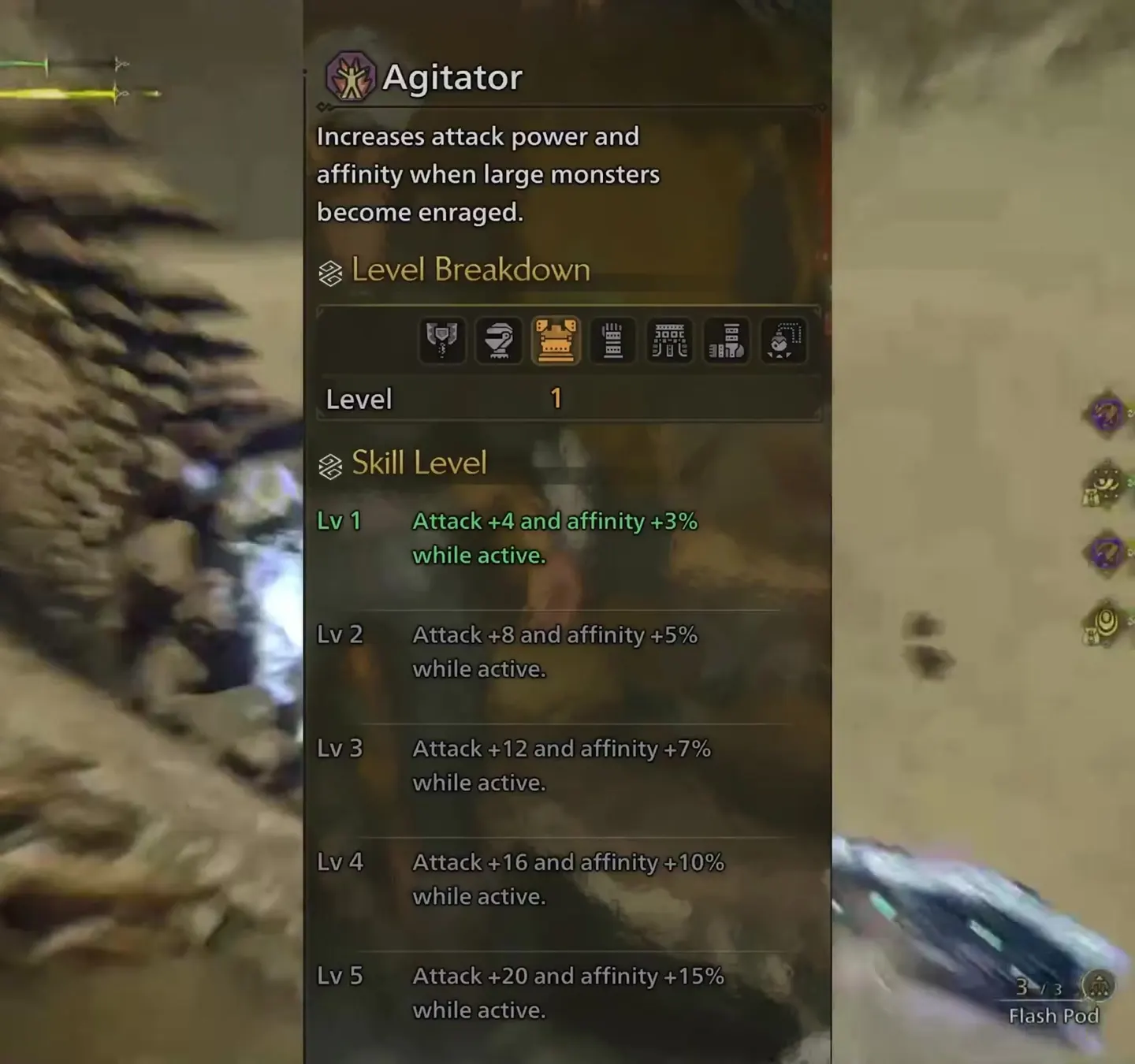
He notes it was stronger in World, where the clutch claw let you force a monster into rage early. In Wilds it is still a staple: 31 of our 42 endgame builds run it, 20 of them at Lv 5, including the Binding Gore Charge Blade.
How many levels of Burst do you need?
One level for a raw build, five for an elemental build. Burst rewards landing hits in a row: at Lv 1 your first hit gives a small boost, replaced by a larger one after the fifth, and each level above makes that boost bigger. The size depends on the weapon. A community table Monclerty shows at 7:15 puts the raw bonus for most weapons at +8 at Lv 1 and +18 at Lv 5, while the element bonus climbs steadily from 60 to 140. The first raw level is by far the most efficient, which is why raw builds stop there.
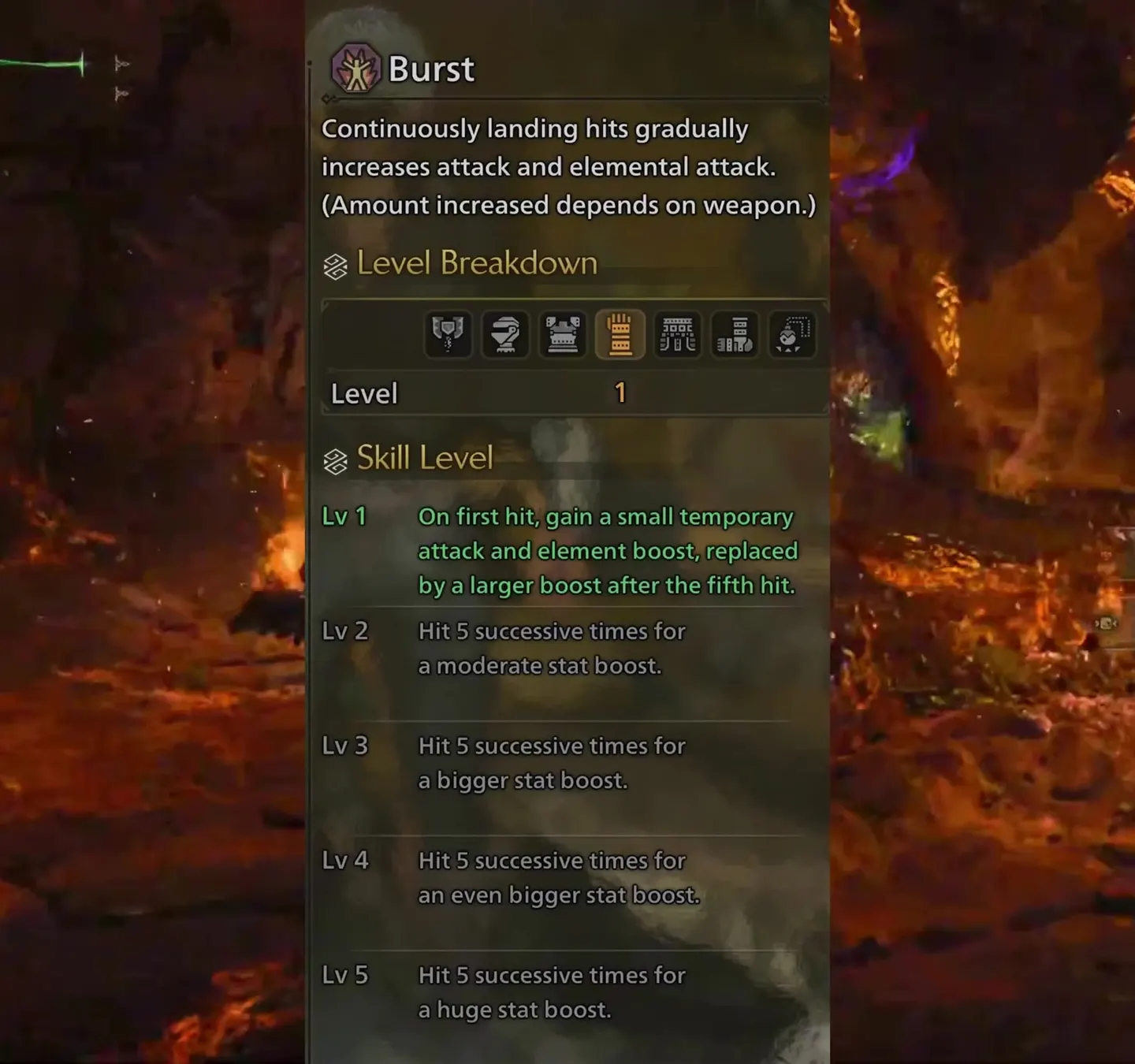
It suits weapons that stay on the monster. Fast weapons trigger it without thinking; weapons with long disengaged stretches drop it. Burst is the most common skill in our endgame builds, 37 of 42, and the usual level is 2; 11 go to Lv 5, such as the Full Burst Gunlance.
Resentment, Peak Performance or Counterstrike: which health skill?
Counterstrike for most players, Resentment only with its synergies, Peak Performance mainly at range. Resentment gives +5 to +25 attack while you have red, recoverable health. Monclerty rates it medium for Lance, which takes chip damage when it blocks, and for weapons that offset. It shines with two set bonuses: Soul of the Dark Knight on Great Sword, which raises element while you have recoverable damage, and Nu Udra’s Mutiny, which deals extra damage while Resentment is active. Outside those, he says most builds can skip it.
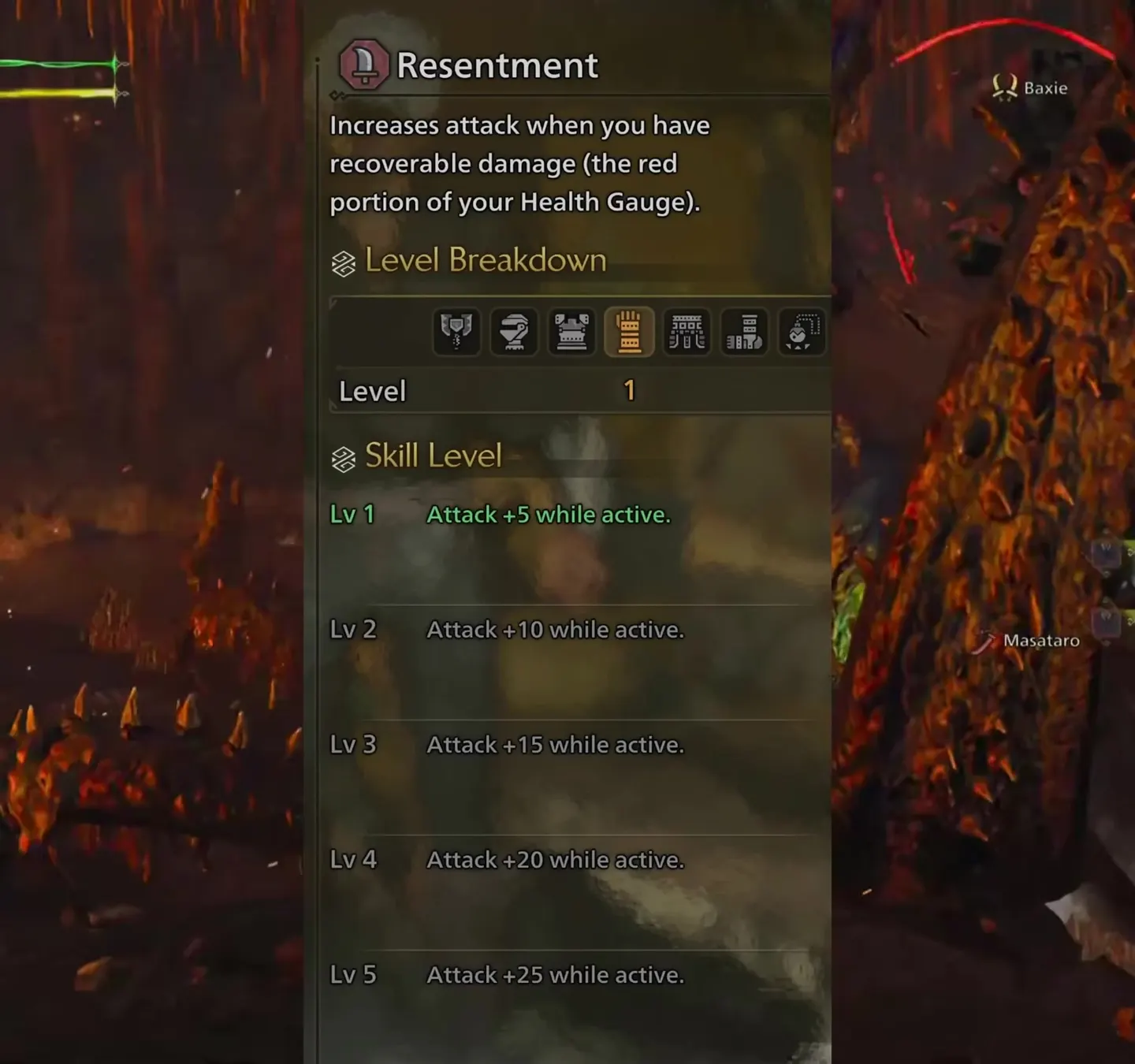
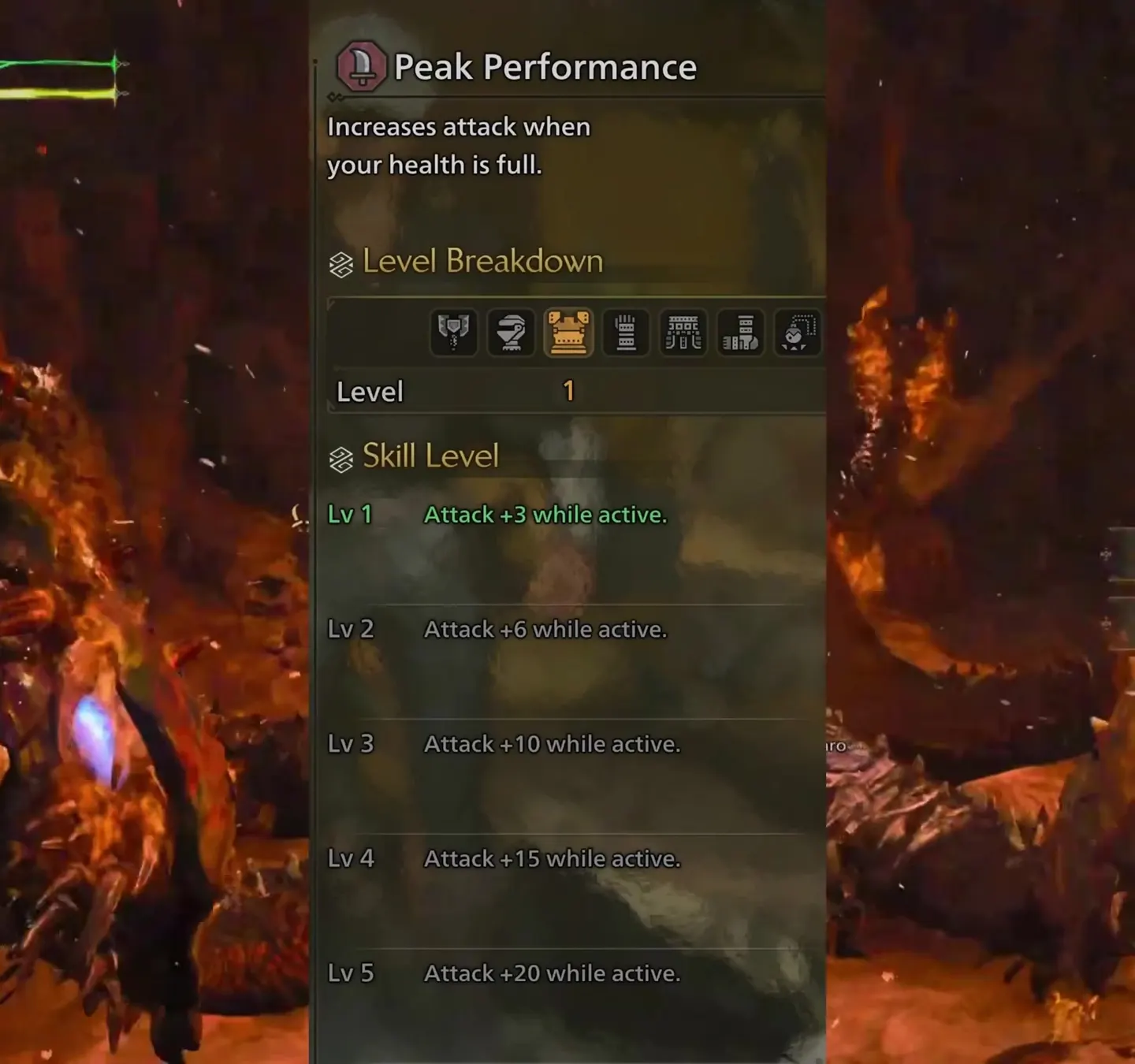
Peak Performance is the mirror image: attack while your health is full. Here the video and the game disagree. Monclerty says five levels give +25 attack, but the panel on his own screen reads +3, +6, +10, +15 and +20, and the game data agrees: Lv 5 is +20. The +25 figure belongs to Resentment. He rates Peak Performance low for melee players who get hit, better on Bow and bowguns, and good with the Gogma four-piece bonus Mutual Hostility II, whose barrier keeps your health full through a mistake, as in the Mutual Hostility Dual Blades build.
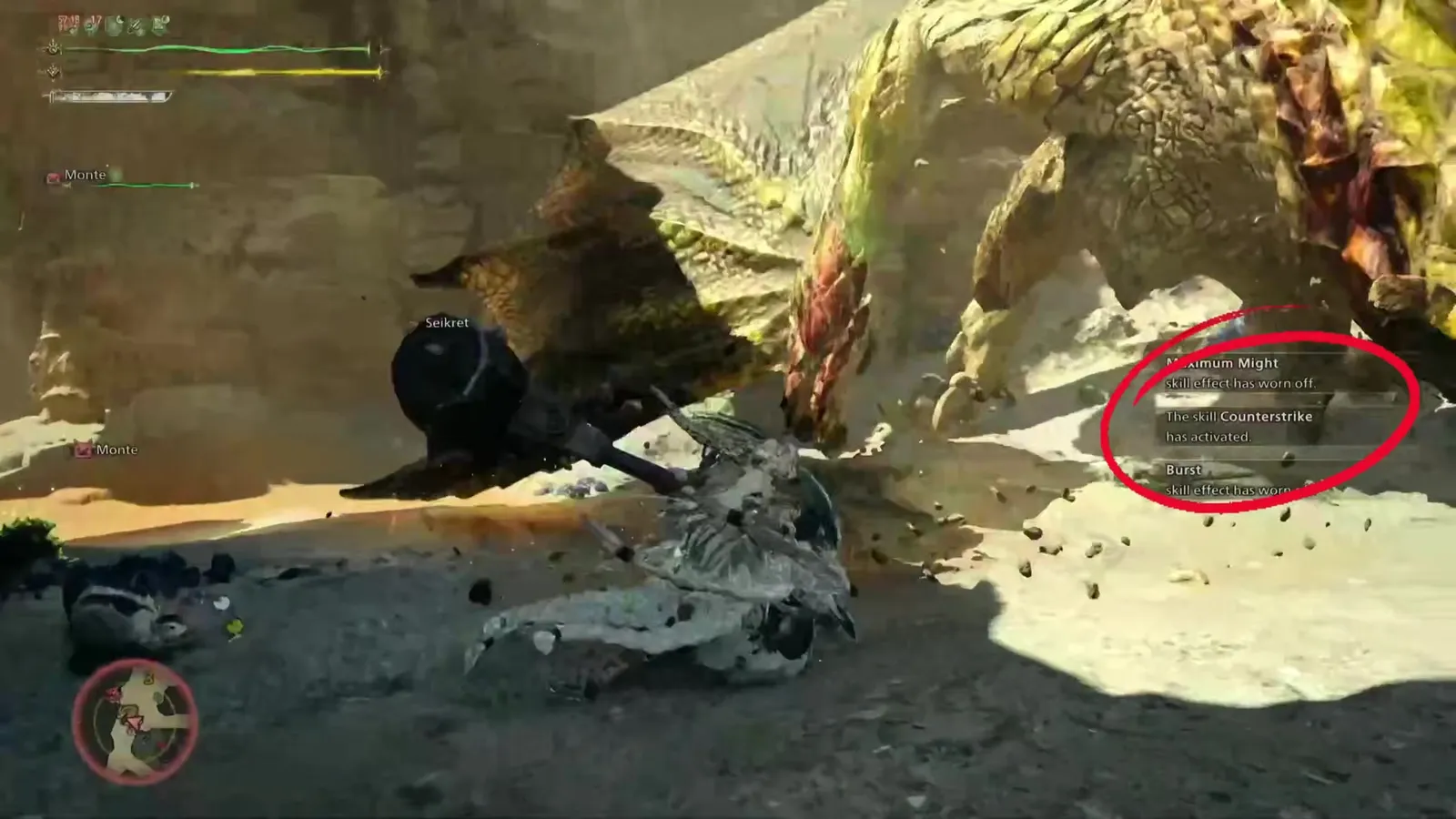
Counterstrike gives +10, +15 and then +25 attack for a while after you are knocked down, and it only has three levels. Monclerty says the effect lasts about 30 seconds at Lv 1 and 45 at Lv 3; the game only says the time is extended. Being knocked down means falling, not a trip or a flinch, but he found that offset attacks also count. That makes it a strong pick on Hammer and Great Sword: 13 of our endgame builds run it, 10 at Lv 3, such as the Black Eclipse Hammer.
Is Adrenaline Rush worth it?
Only if you dodge through attacks rather than away from them. Adrenaline Rush adds attack after a perfectly timed evade: +10 at Lv 1, up to +30 at Lv 5. Monclerty points out that a single level already beats two levels of Agitator on raw attack. It works best on weapons with invincibility built into their moves, Long Sword, Dual Blades and Bow, and loses uptime in multiplayer, where the monster is not always attacking you.
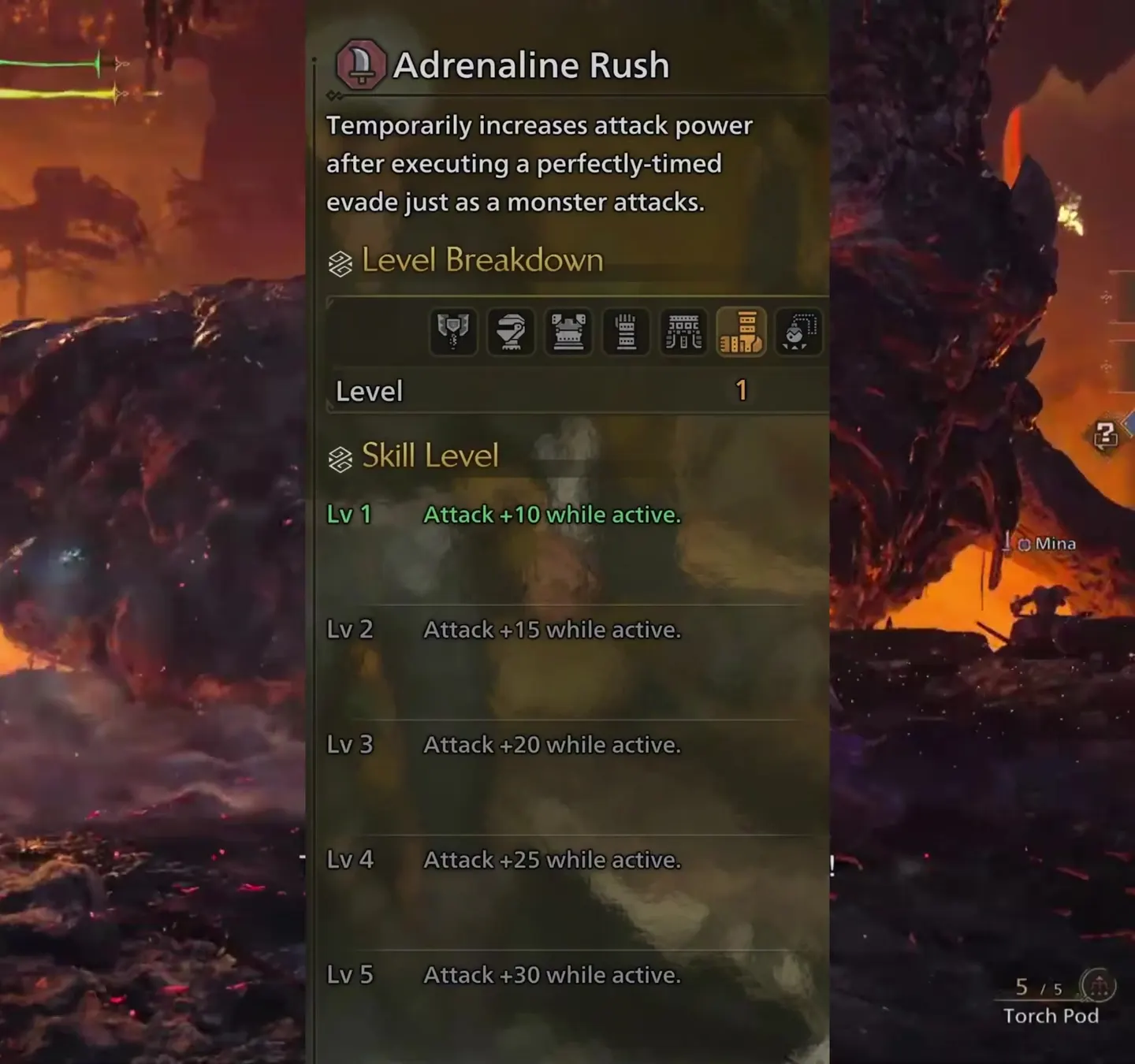
One correction on cost: the video talks about size 2 slots, but the only single-skill jewel for it is the Counterattack Jewel [3], a size 3 that competes with Weakness Exploit and Agitator. That is probably why our builds run it at Lv 1 in most cases.
When are Coalescence and Antivirus worth it?
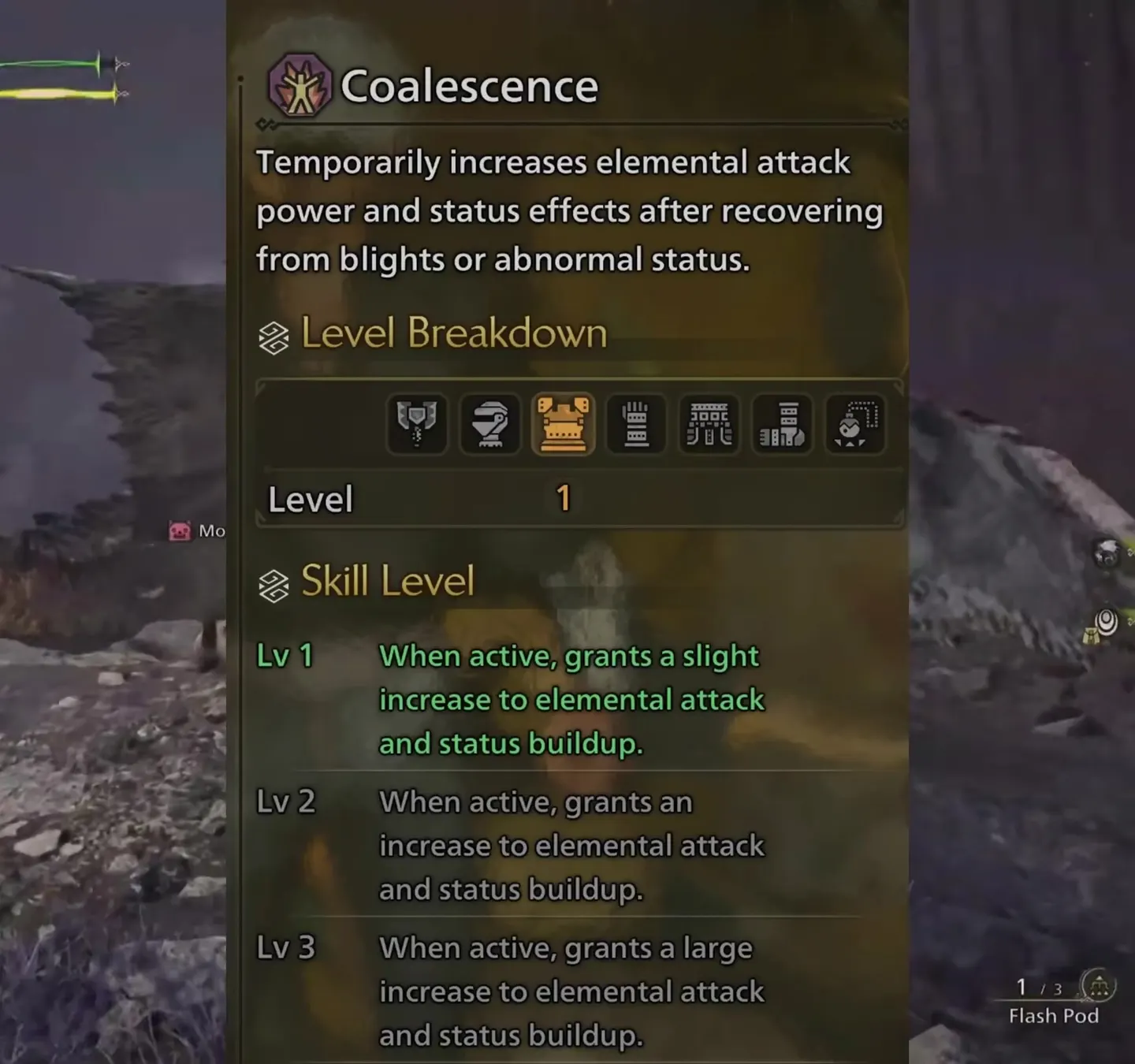
Coalescence is worth it on elemental builds that have a built-in way to get a status and recover. It raises elemental attack and status buildup for a while after you recover from a blight or abnormal status, in three steps from slight to large. Monclerty’s point is that you should never take a fireball on purpose to trigger it. Instead, two set bonuses do it for you: Gore Magala’s Tyranny infects you with the Frenzy, and Mizutsune’s Prowess gives you minor bubbleblight after several evades. Both count.
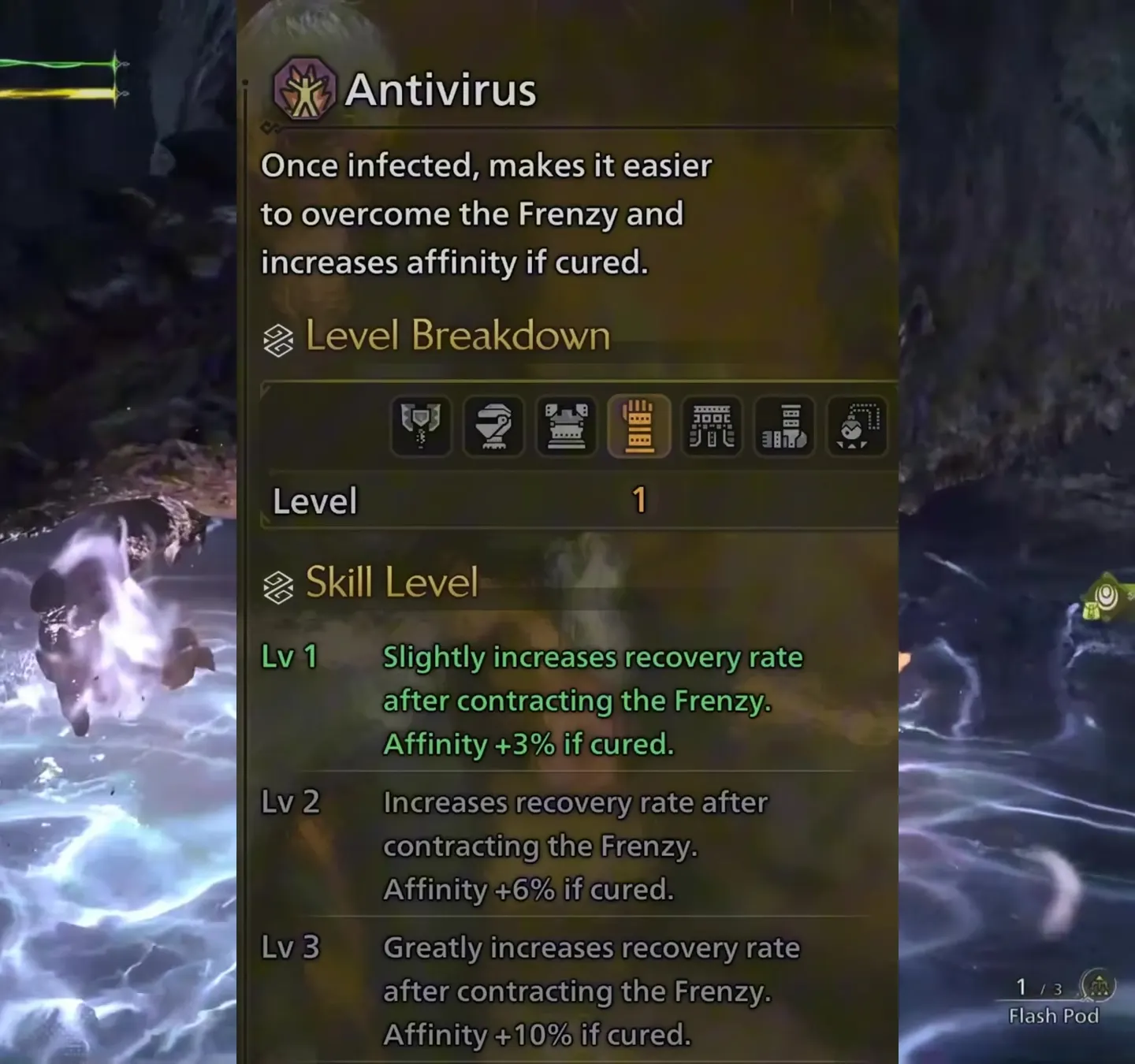
Antivirus is the other half. It helps you overcome the Frenzy faster and gives +3%, +6% or +10% affinity once you are cured. It does not infect you by itself, so it does nothing for Coalescence on its own. Monclerty calls it high priority, “dare I say mandatory”, for any build with two or more pieces carrying Gore Magala’s Tyranny, because the set bonus keeps infecting you and you keep collecting the affinity, even against monsters that do not spread the Frenzy. It costs a size 1 jewel, the Sane Jewel [1]. All 16 of our endgame builds that run it take it to Lv 3.
Is Flayer worth it after Title Update 4?
Yes, at one or two cheap levels. Flayer makes wounds easier to open and adds a burst of extra non-elemental damage once enough buildup lands, a white flash that works a little like blast. Wounds matter in Wilds, and Monclerty cites fights where breaking a wound is how you knock the monster out of a dangerous state. Title Update 4 raised the cap from three to five levels, and our data has all five. He estimates the proc chance went from about 33% to about 50%, which is his estimate rather than a published figure.
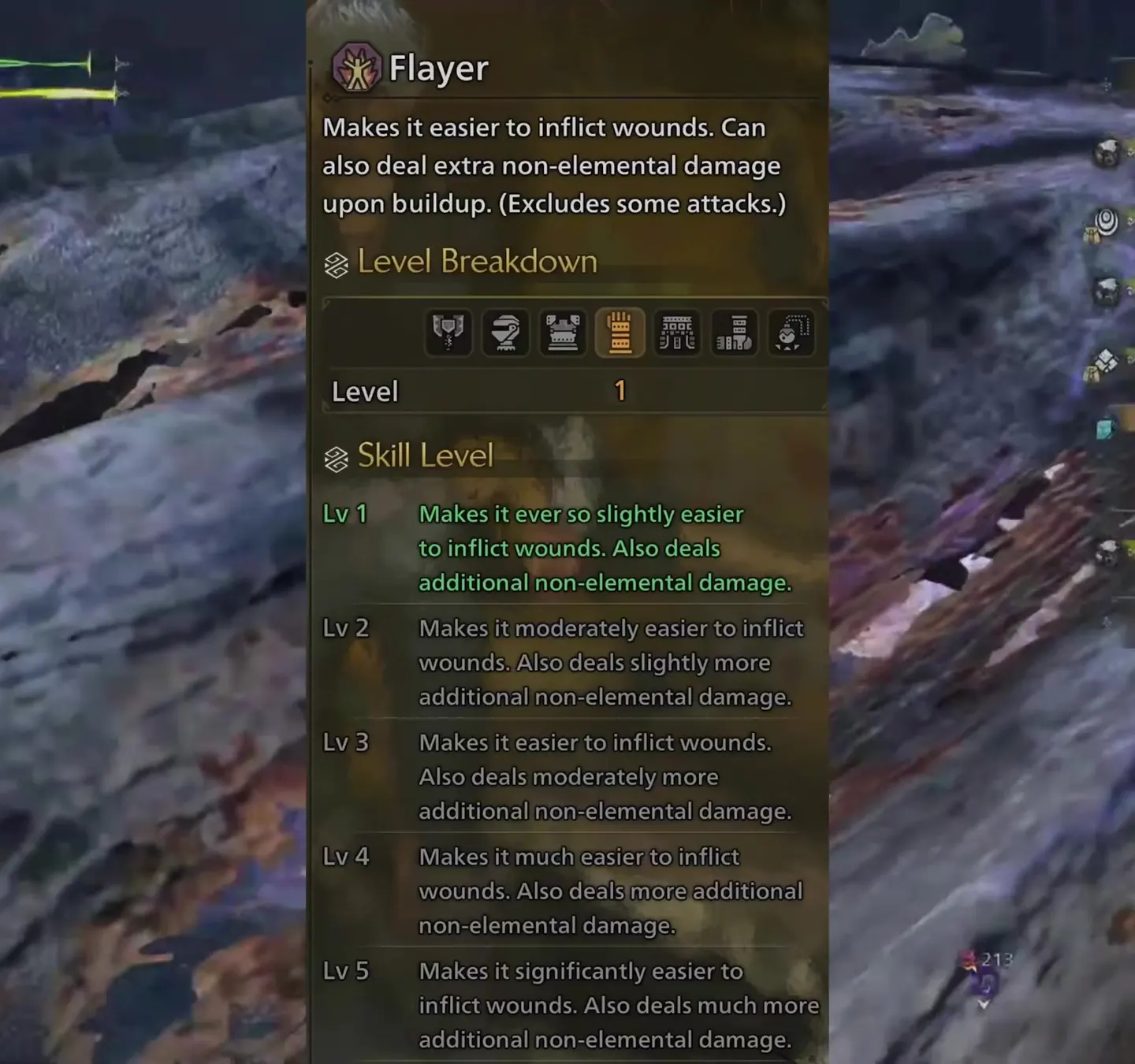
His advice is not to max it, since the Flayer Jewel [3] is a size 3 that also fits Weakness Exploit or Agitator; take it when armor gives you points cheaply, which Arkveld gear does. 19 of our endgame builds run it, 11 of them at Lv 5, such as the Gore Flayer Dual Blades.
Are Convert Element and Elemental Absorption worth it?
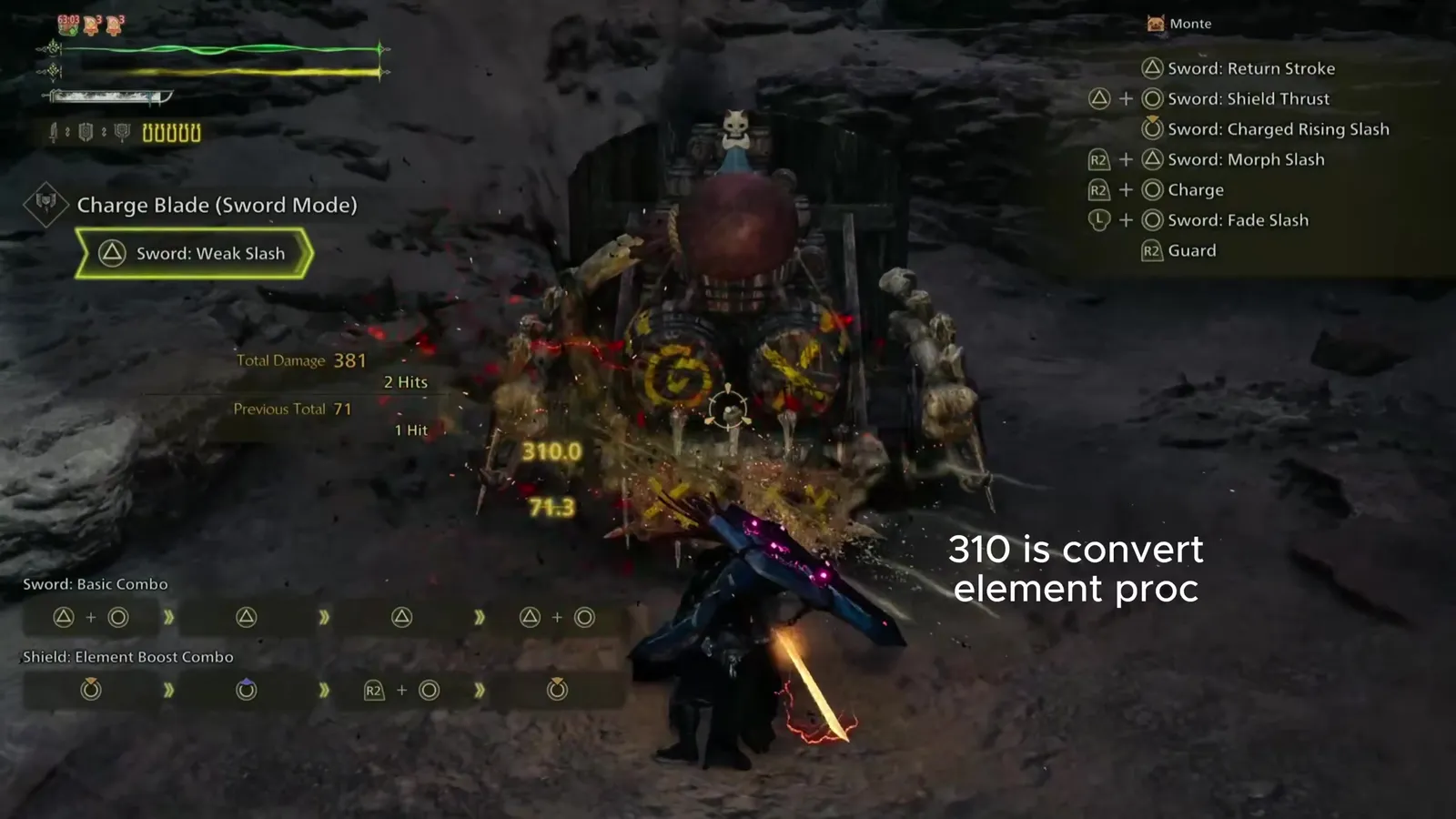
Convert Element is worth it in dragon matchups; Elemental Absorption is a low priority. Both need you to take or block elemental damage first. Convert Element then adds dragon attack and small dragon explosions as you hit, which build up like blast. In the training area it procs for 310 damage, and Monclerty adds that it can make the monster flinch.
Elemental Absorption raises your weapon’s element and, per the game, your resistance to the element you were hit by, +4, +6 or +8. Monclerty first says it does not raise that resistance, then corrects himself on screen: at 16:10 his Ice resistance goes from 30 to 36 with the skill at Lv 2, exactly the +6 in the description. He still rates it low, because the fast weapons that use element get the smallest boost. Neither skill has a jewel; they come on armor or charms.

Defense Boost or Divine Blessing: which is better?
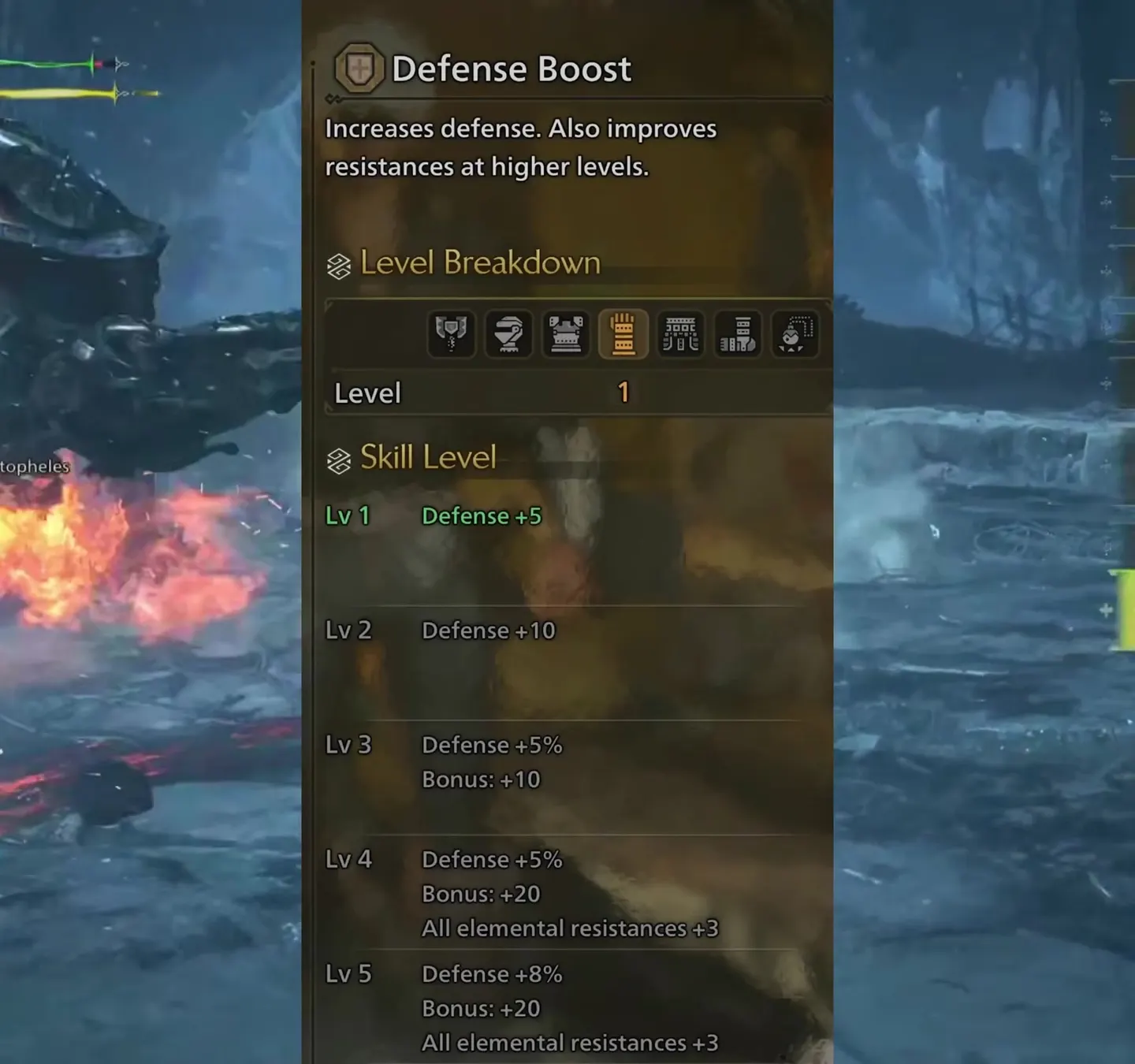
Defense Boost if you need to survive a specific one-shot, Divine Blessing for everything else. Defense Boost is flat +5 and +10 defense at Lv 1 and 2, which Monclerty calls worthless next to an Adamant Seed; the percentage starts at Lv 3 (+5% and +10), with elemental resistances from Lv 4, and the game data goes up to Lv 7 at +10%. It is always on, which is its one strength. It is in none of our 42 endgame builds.
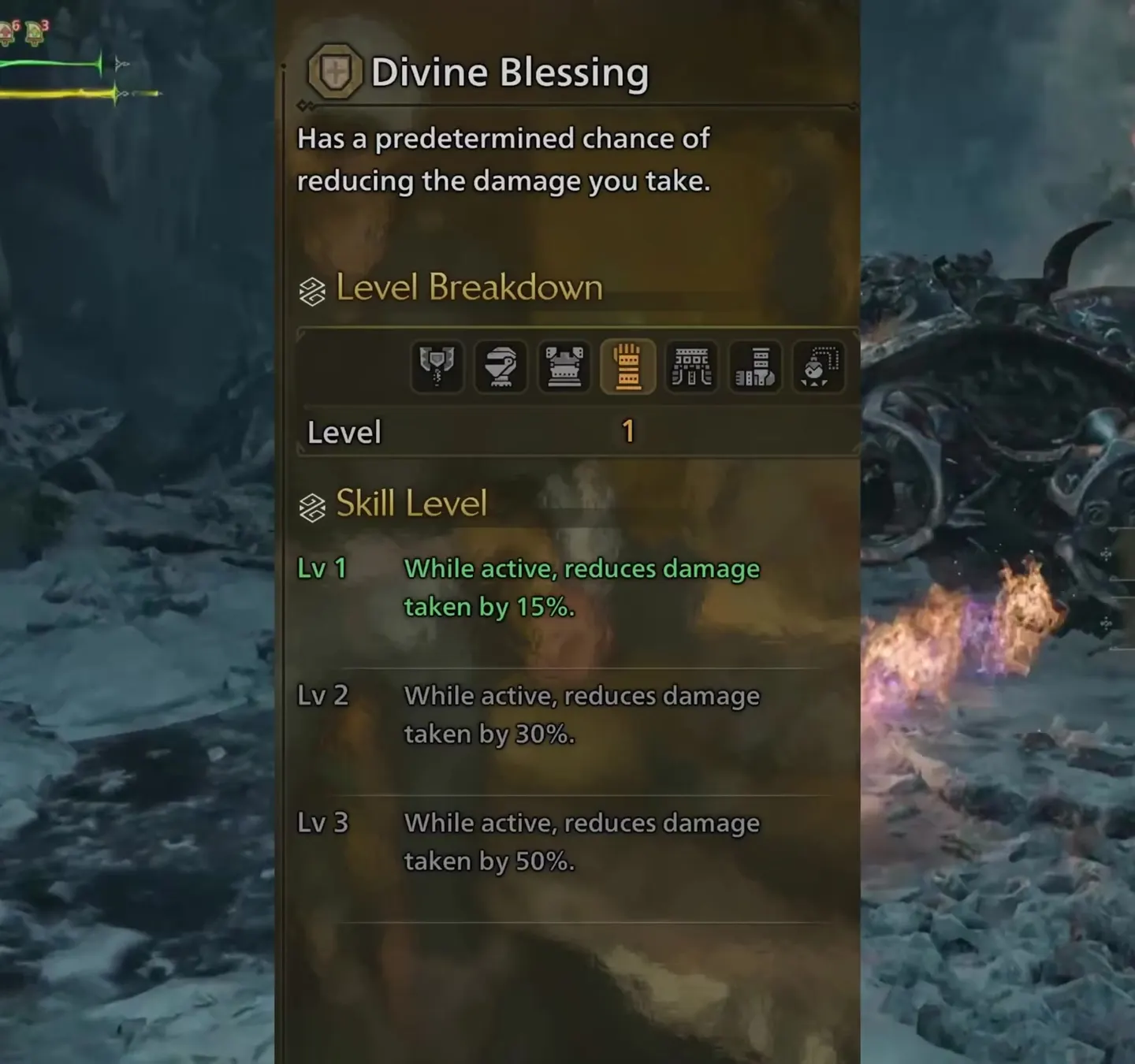
Divine Blessing cuts damage by 15%, 30% or 50% when it procs. The proc chance is not published; Monclerty cites the community estimate of 25% to 33%. His verdict is high as insurance while learning a monster, but he does the maths on a one-shot: at a 25% proc you still cart three times out of four. Three levels fit in three size 1 slots with the Protection Jewel [1], which is why 31 of our endgame builds run it anyway.
What level of Earplugs do you need in MH Wilds?
Level 2 for almost every monster. Earplugs 2 nullifies weak roars and reduces strong ones; Lv 3 nullifies both. The chart Monclerty shows lists four monsters with a strong roar: Jin Dahaad, Zoh Shia, Gore Magala and Gravios. The in-game Large Monster Field Guide he opens confirms a Strong Roar for Jin Dahaad and Zoh Shia; the other two come from the chart only.
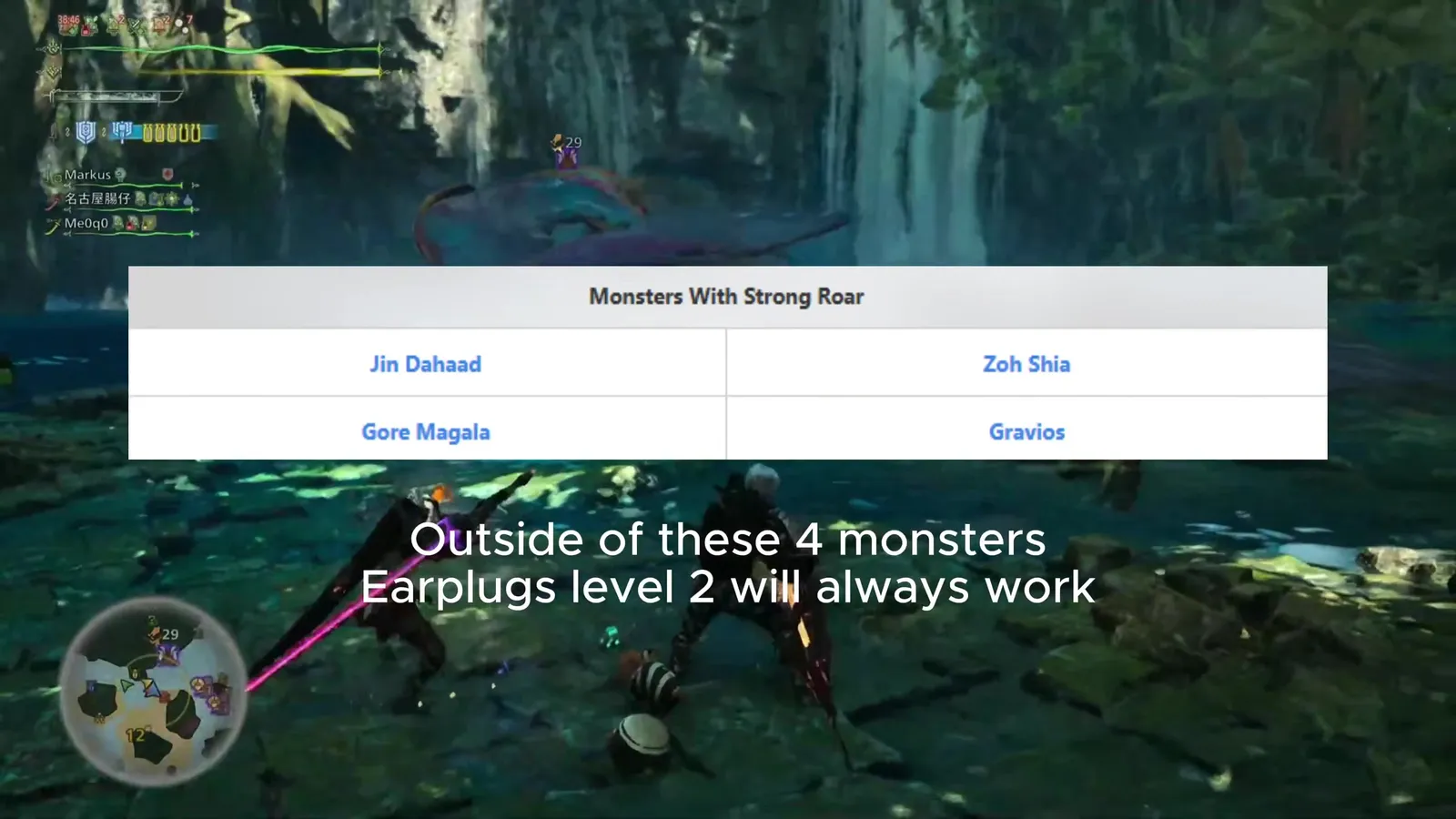
Monclerty rates it mid to high for weapons with long setups, like a Charge Blade SAED or an Insect Glaive in the air, and for weapons that cannot block or dodge through a roar. A cheap trick: the Great Bagpipe Hunting Horn plays Earplugs as a melody, so one point in armor is enough when it is in the party.
Are Speed Eating and Quick Sheathe worth it?
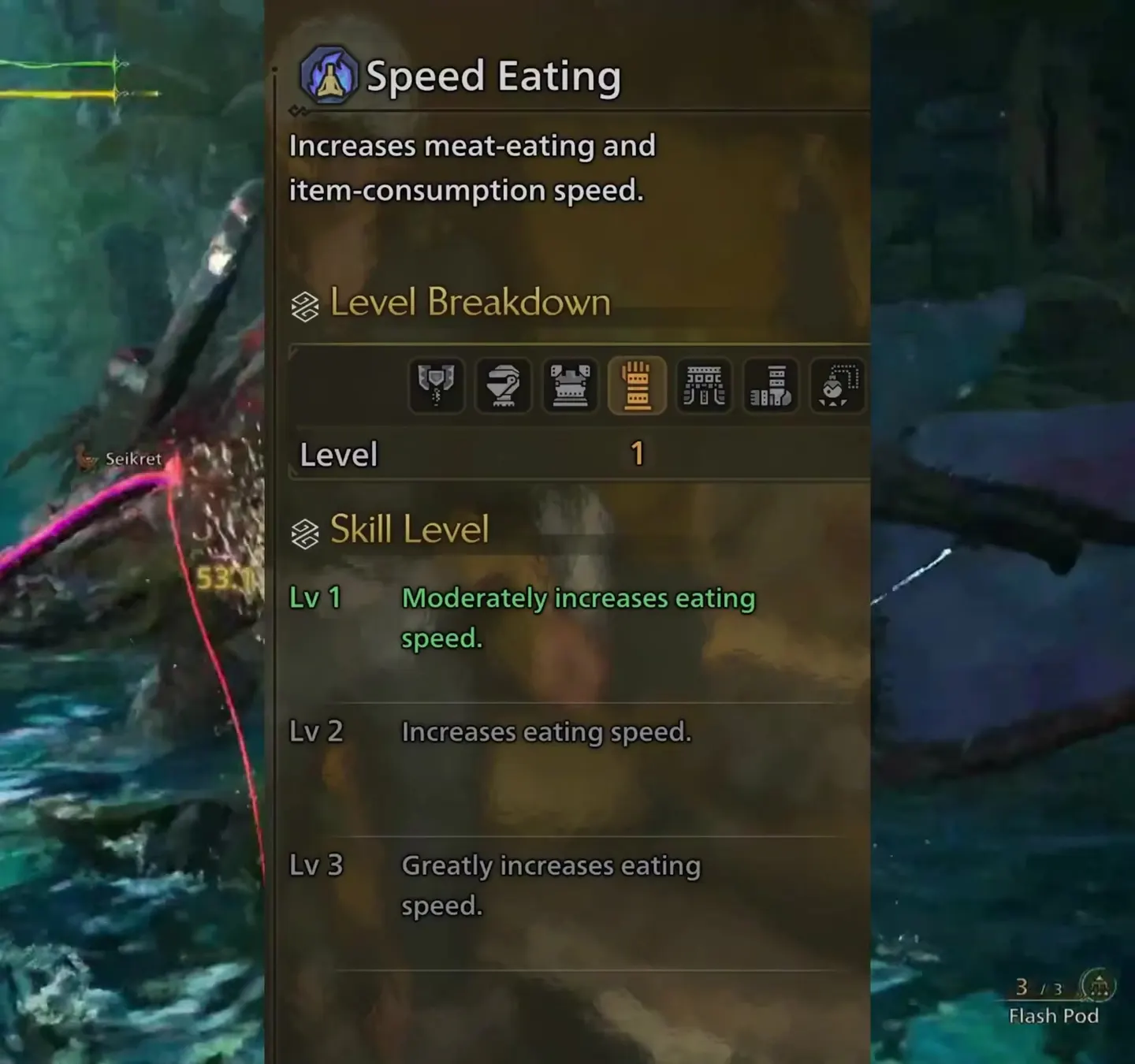
Both are comfort picks. Speed Eating speeds up eating and drinking in three steps, and Monclerty says the animation is almost halved from Lv 1 to Lv 3; that is his estimate. It applies to rations, potions and anything your hunter consumes, not to area items like Life Powder. It costs size 1 jewels, and he rates it low, mid for players who heal often or play support.
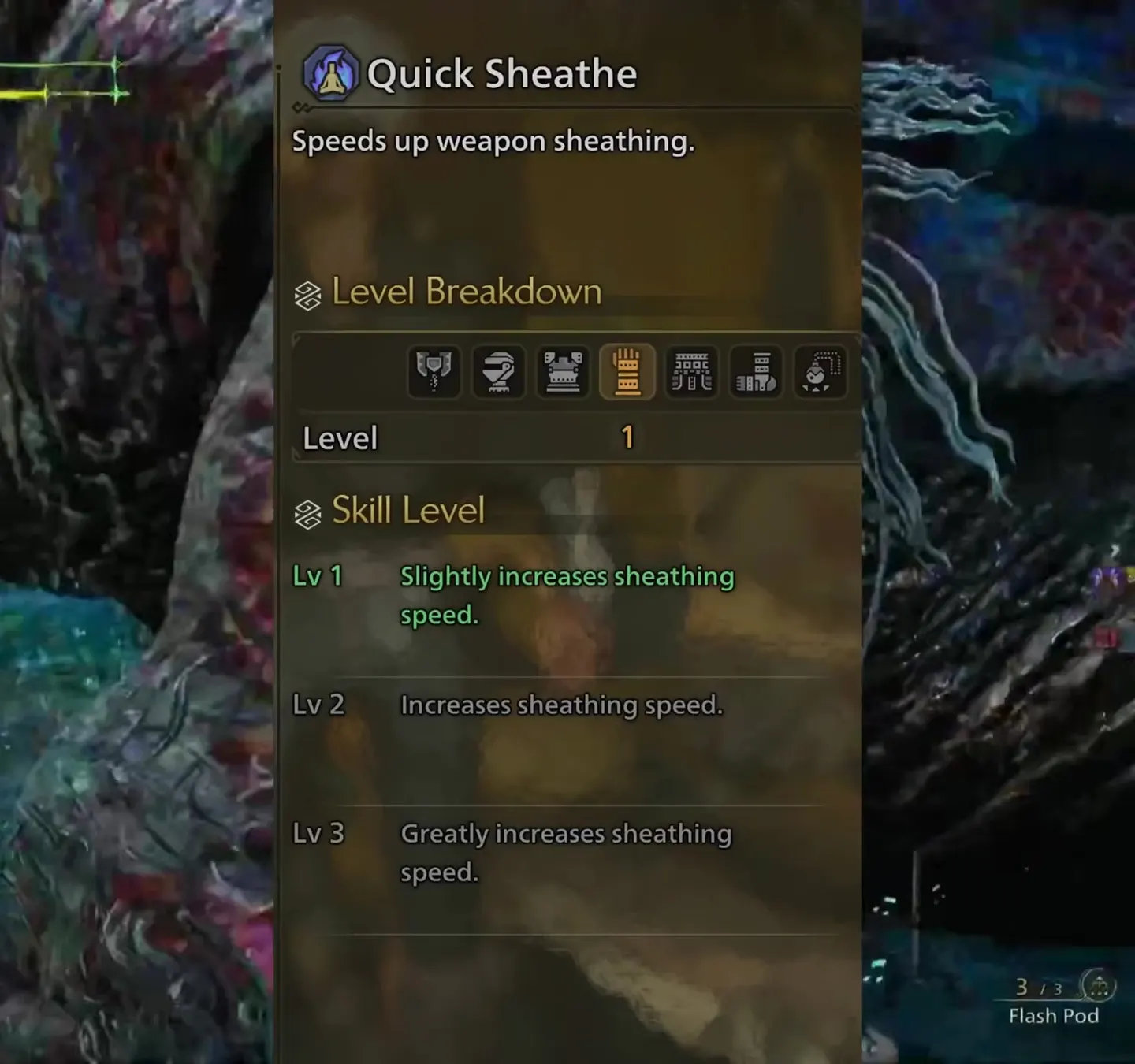
Quick Sheathe speeds up putting your weapon away, not the weapon swap on the Seikret. Monclerty rates it high for Long Sword, where sheathing is part of the combo, mid for weapons with long animations and low otherwise. Our Long Sword builds agree: every endgame one runs it at Lv 3.
Evade Window or Evade Extender: which is better?
Evade Window if you want more invincibility, Evade Extender if you want more distance. Evade Window lengthens the invulnerable part of your dodge over five levels; Evade Extender makes the dodge travel farther over three. Monclerty prefers Extender, calling it his opinion, and warns that too much of it can roll you into an attack. He rates both high for slow weapons and weapons that cannot block, and adds that Lance and Gunlance side hops and the Insect Glaive vault also go farther with Extender.
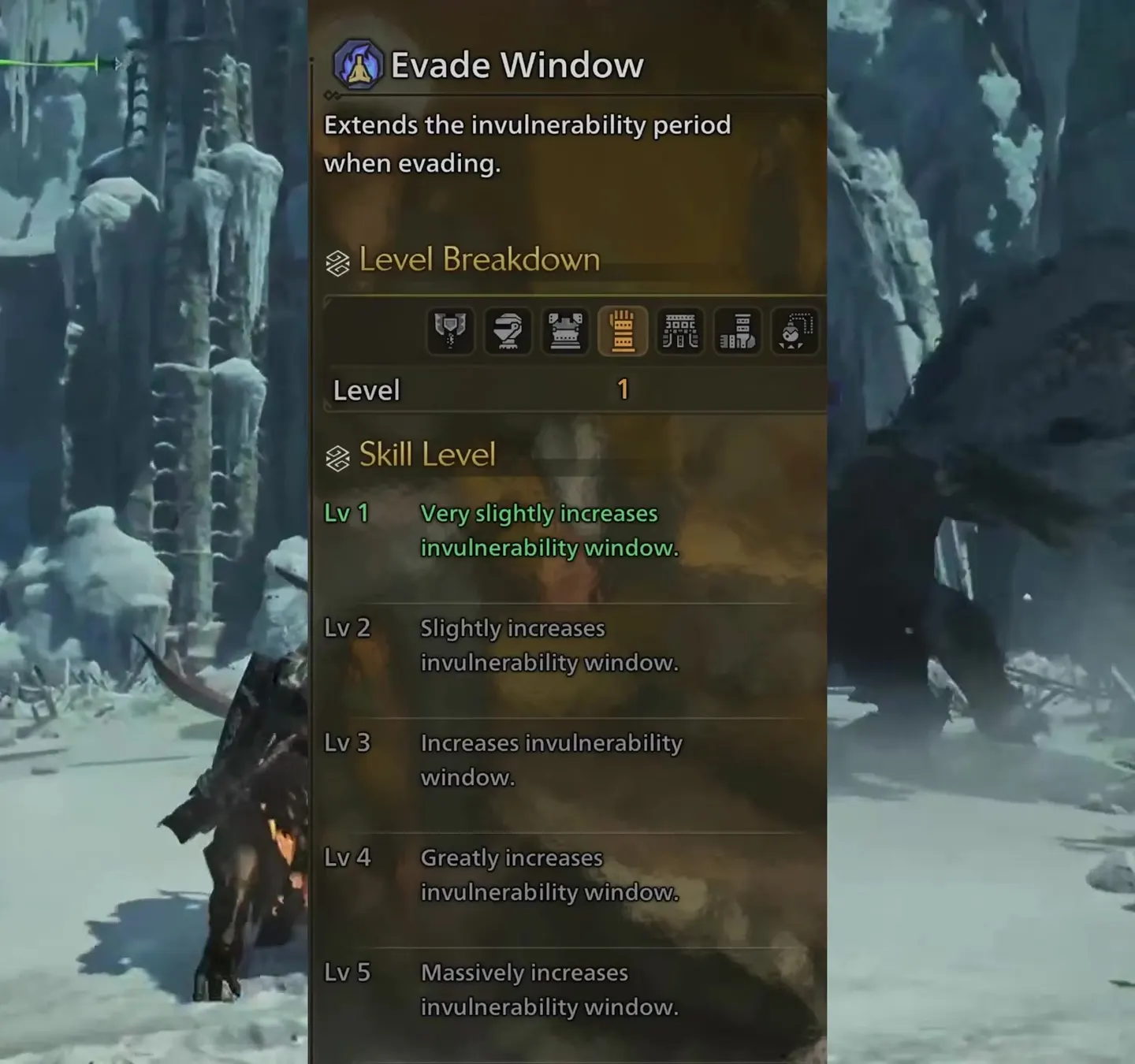
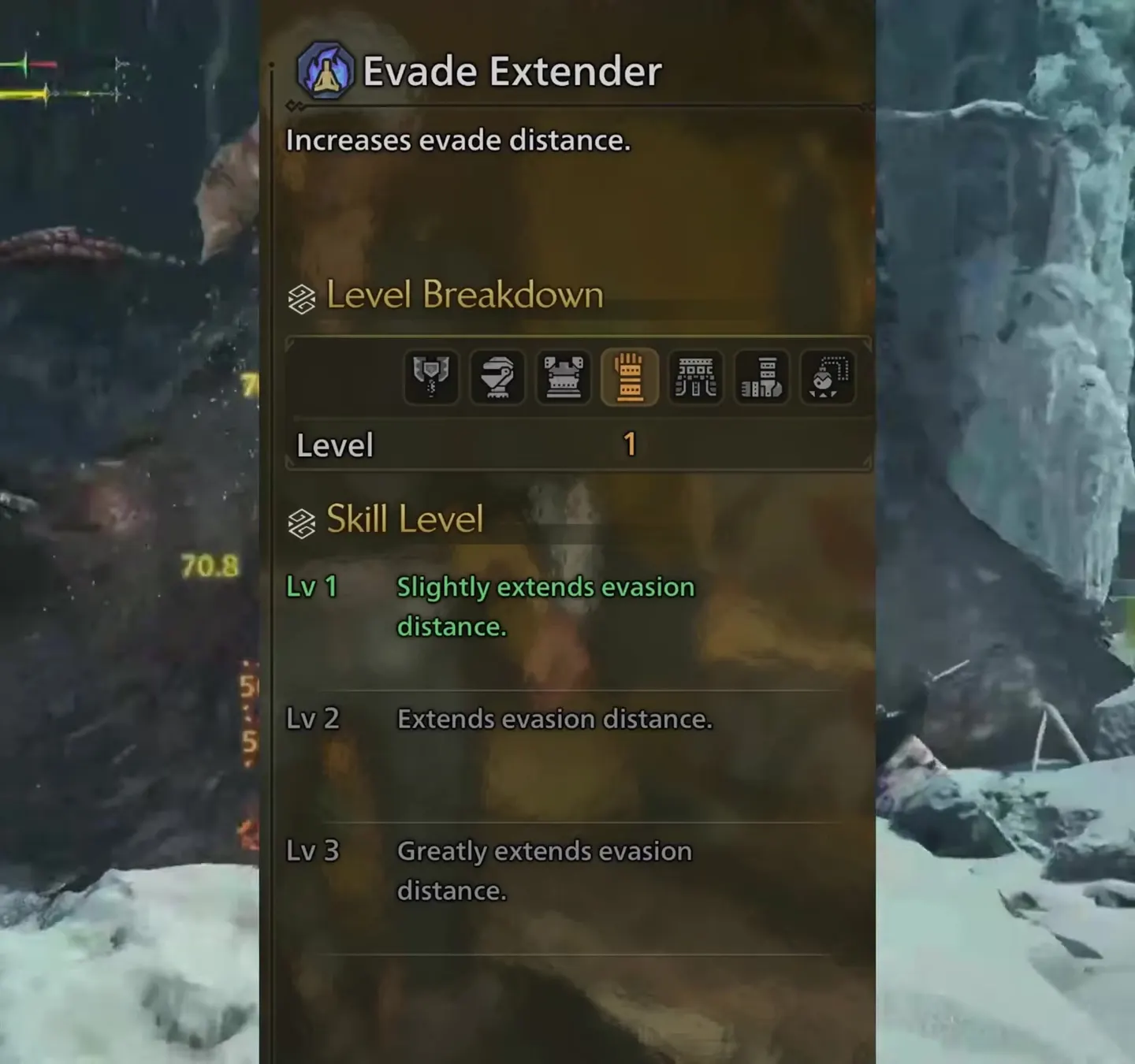
Our builds lean his way: Evade Extender is in 20 endgame builds, Evade Window in 7, and the ones at Lv 5 are evasion sets like the Gogmazios evasion Insect Glaive.
Are Wide-Range, Recovery Up and the stamina skills worth it?
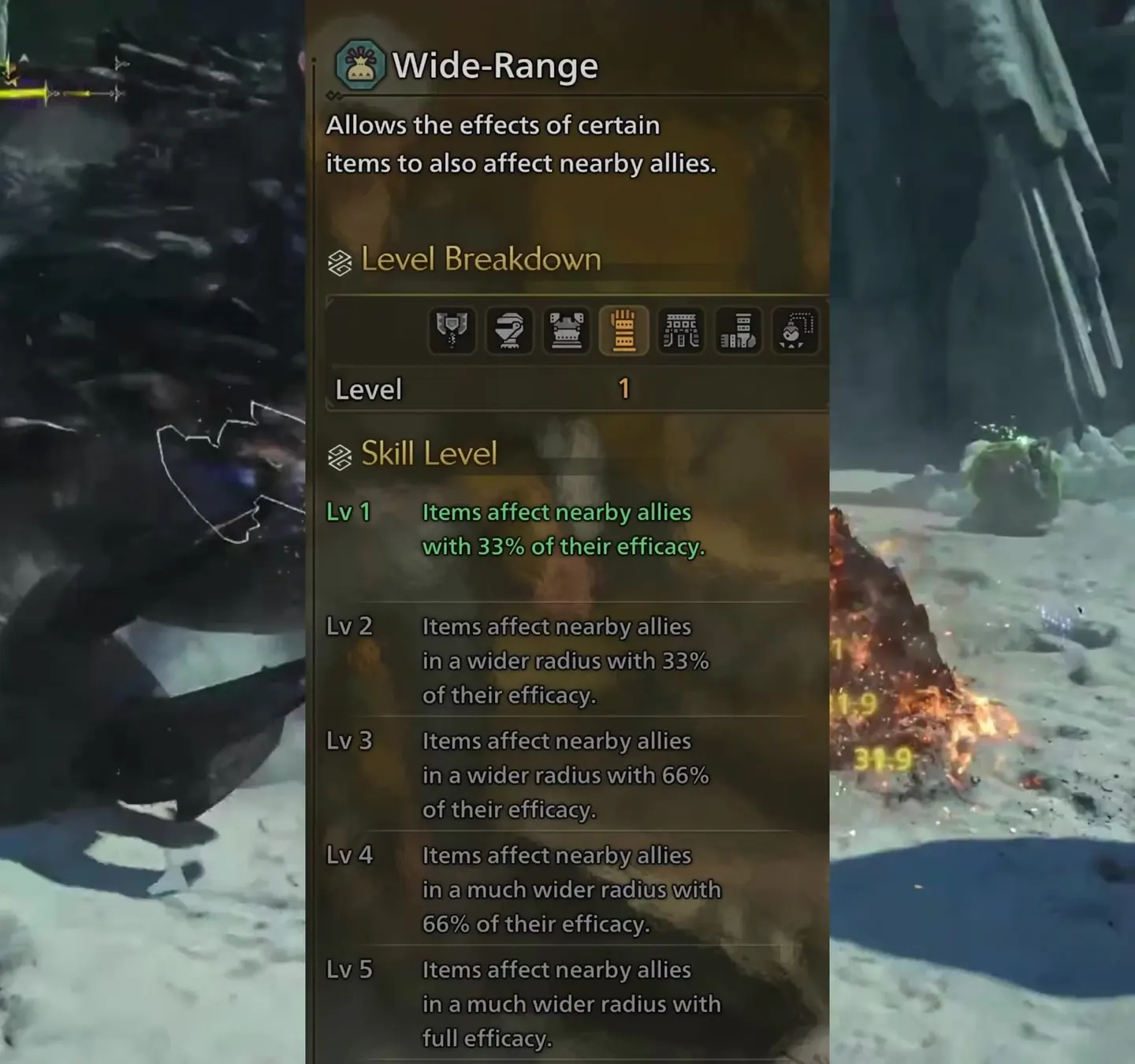
Wide-Range is all or nothing. It shares your consumables with nearby allies at 33% of their effect at Lv 1 and 2, 66% at Lv 3 and 4, and full effect only at Lv 5. Monclerty calls it high priority for support builds and non-existent for everyone else; paired with Mushroomancer and Free Meal on a support Sword and Shield, your teammates barely need their own items. Our support healer Sword and Shield is the only endgame build that runs it, at Lv 5.
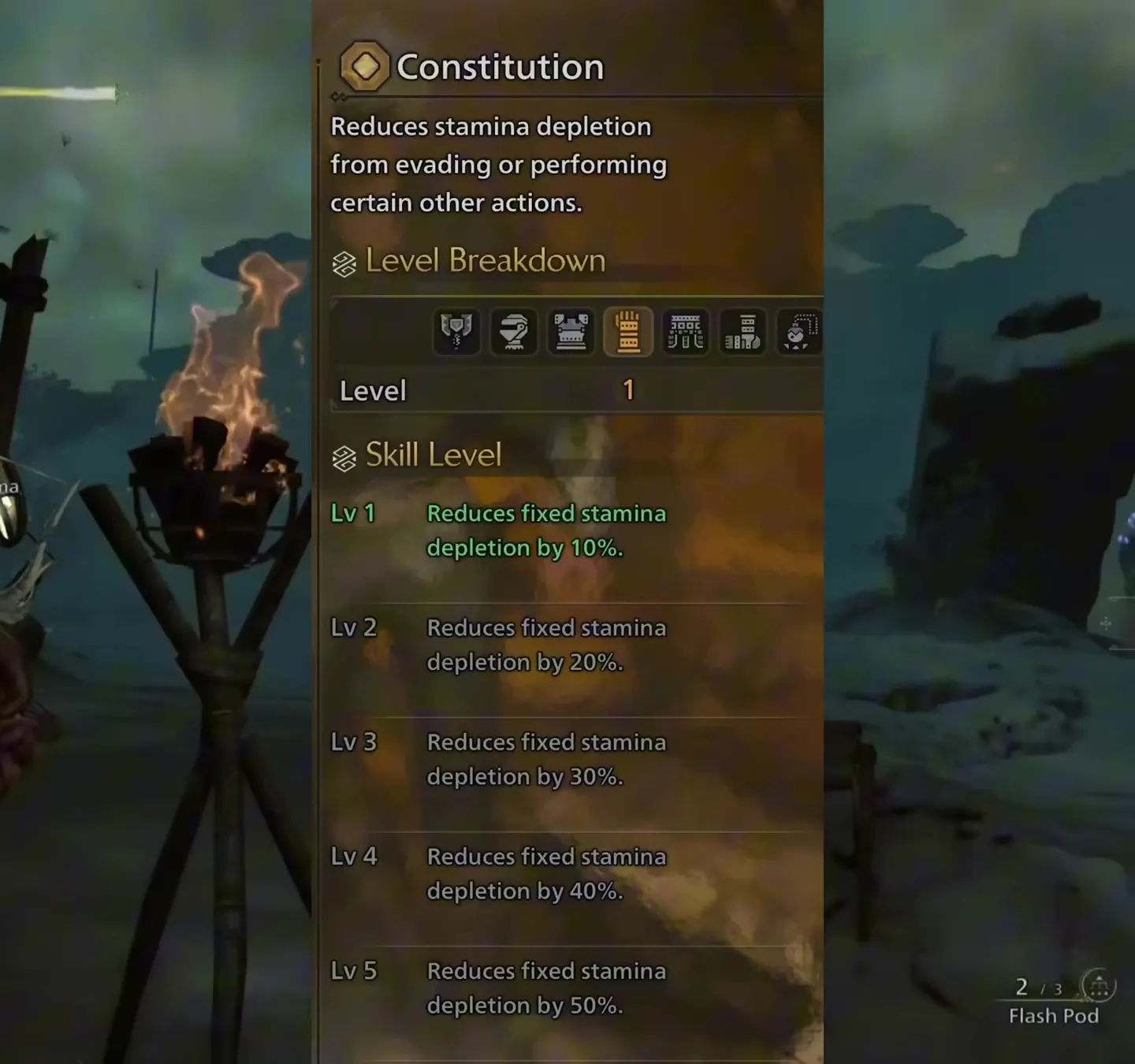
Recovery Up only improves healing you already do, so it is low for standard damage builds and strong on regeneration sets such as the health regen Gunlance. Constitution cuts fixed stamina costs by 10% to 50%, and Stamina Surge speeds recovery by 10%, 30% or 50%: one is efficiency, the other recovery. Monclerty rates them high for Dual Blades and Bow, which need stamina for their strongest modes, and advises finding the amount that feels comfortable and putting everything else into damage. For blocking weapons, he says, learning the perfect guard beats Constitution.
His closing rule is the one to keep: ask which skill is best for what your build is trying to do, not which skill is best. For complete sets built on these picks, see our builds, and the tier list for which weapons they suit best in Ver. 1.042.